

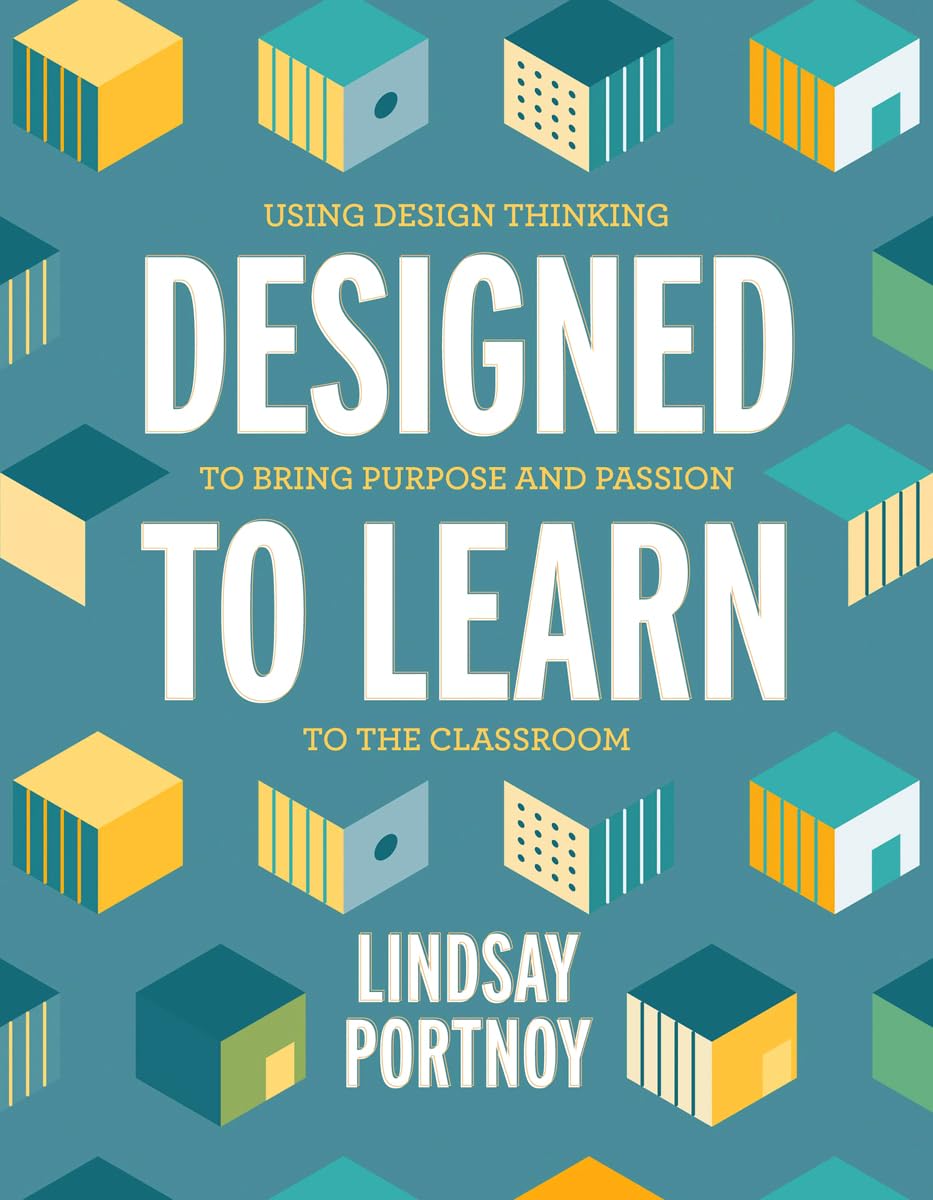
 In Designed to Learn, Lindsay Portnoy presents a compelling case for integrating design thinking into education, shifting from traditional instruction to student-centered, inquiry-driven learning. Through engaging stories, research-based strategies, and practical tools, the book provides a framework for fostering curiosity, critical thinking, and collaboration in the classroom. Below is a chapter-by-chapter summary of key insights.
Understanding the Learning Process
Portnoy begins by prompting readers to reflect on their own learning experiences: What drives us to learn? How do we transition from learning to doing? This self-reflection sets the stage for understanding how students engage with new knowledge.
She emphasizes the importance of truly knowing students beyond the surface—like icebergs, much of who they are remains unseen. By fostering meaningful connections and allowing students to take the lead while teachers guide, learning becomes more engaging and effective. Shared responsibilities such as asking questions, providing feedback, and seeking information empower students to become active participants in their education.
Applying Knowledge Through Experience
The book highlights project-based learning (PBL) as a powerful approach to education. Rather than treating each unit as a separate entity, educators can design them as interconnected pieces of a larger project. Through formative assessments, students receive ongoing support, while summative assessments elevate their voices.
Portnoy introduces the three Cs of learning:
- Curiosity sparks inquiry.
- Confusion is valuable when leveraged for deeper understanding.
- Connection ties learning to real-world applications.
Additionally, she advocates for self-assessment, encouraging students to reflect on their knowledge and learning processes rather than relying solely on teacher-led evaluations.
Deepening Understanding Through Inquiry & Collaboration
When students struggle to ask questions, it often signals a lack of deeper engagement with the topic. Portnoy suggests using peer and self-assessments to help students explore different perspectives and develop critical thinking skills.
A particularly engaging strategy is the Critical Friends Protocol, where students:
- Present their ideas.
- Listen thoughtfully.
- Ask clarifying questions.
- Provide feedback.
- Build on ideas collaboratively.
Activities like debate, discussion, and structured ideation exercises help students develop problem-solving skills and accountability in their learning.
The Role of Failure & Reflection in Learning
Portnoy emphasizes a critical truth: we learn more from failure than from success. Hands-on projects, such as designing a board game to explore historical events, illustrate how failure can be an essential part of the learning process.
As students reach the final stages of their projects, reflection becomes key. They are encouraged to look back at their progress, evaluate their problem-solving approaches, and consider improvements. The book provides guiding questions for this stage, such as:
- The solution I designed was meant to solve…
- One method I followed was…
- In the future, I might try… because it may help…
Rethinking Education Through Design Thinking
One of the book’s most thought-provoking ideas is that schools remain the way they are because they lack design thinking. Portnoy shares an experiment from a small middle school in Oregon, where teachers were given the freedom to teach their passions for one week, and students could choose what interested them. The success of this experiment led to its expansion, sparking the question: Why can’t this be what school looks like all the time?
While public schools must adhere to standards and state assessme
nts, schools can increase opportunities for design thinking through PBL projects, anchor projects, and hands-on experiences in education. Expanding access to AP classes, STEM programs, robotics, and competitions can help bridge the gap between traditional schooling and an innovative, student-driven learning environment.
Designed to Learn challenges educators to rethink how they approach teaching and learning. By fostering curiosity, collaboration, and real-world application, we can create classrooms where students aren’t just absorbing information—they’re actively shaping their own learning journeys.